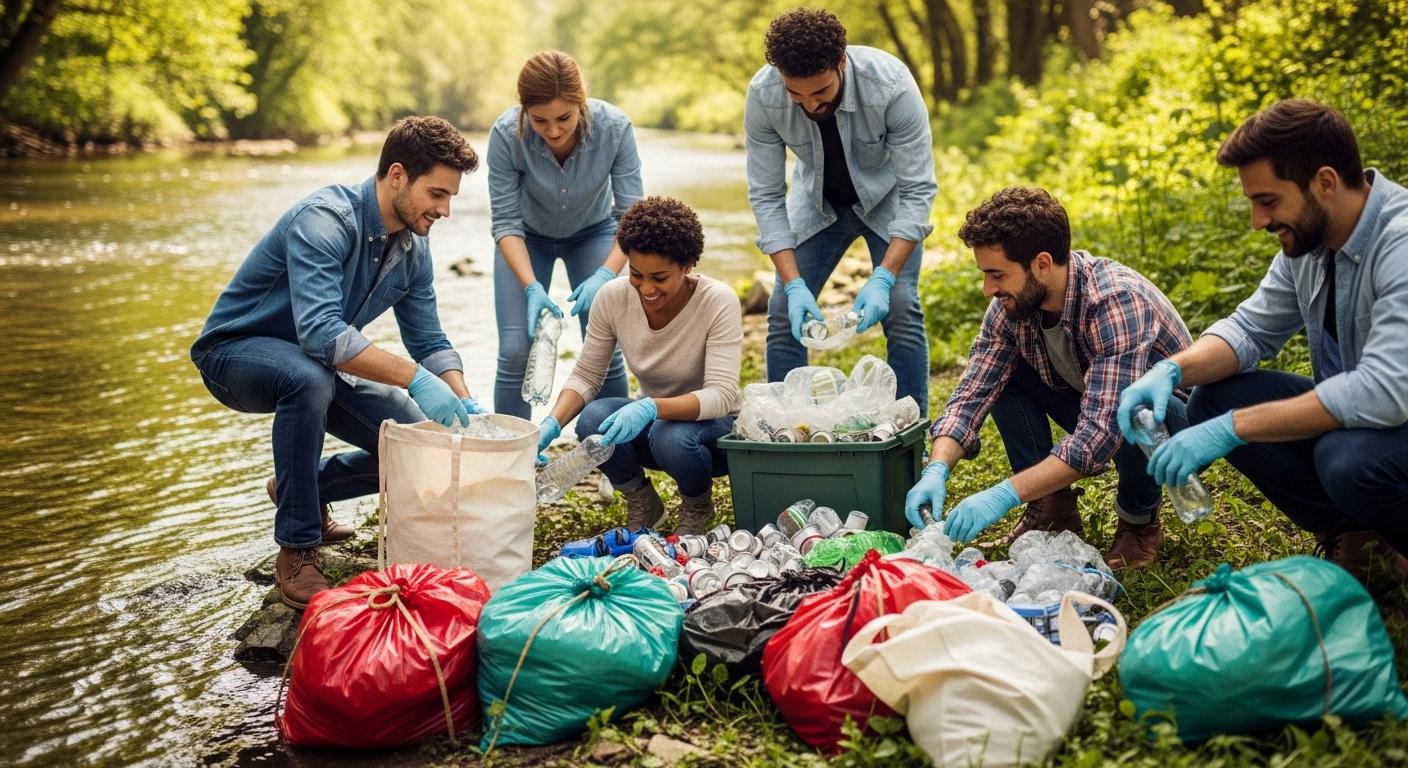
You walk along the sand, the plastic crunches underfoot. This isn’t just debris. The sight pushes a question, a challenge—does this mountain of bottles spell defeat, or spark a stubborn kind of teamwork? Neighbors you never greeted, entire city blocks, a parade of unfamiliar faces on social media—everyone adjusts habits. Local cleanliness flips from passing wish to strong, collective urge. A simple act, a picked-up bottle, tosses back a question: has something finally awakened? For anyone set on answers, the movement’s pulse starts right now. Cleanspiracy isn’t a brand, and never feels like a distant story. Attitudes get shaken, ordinary gestures shift, communities try something new. So, how far do you plan to push this?
The birth and main convictions of Cleanspiracy
No fairy tale unfolds here. The facts ring urgent. Oceans choke, the UN shouts out 430 million tonnes of plastic crowding into ecosystems, year after year. This noise refuses to fade to a backdrop. Lived reality triggers everything—clogged gutters, overrun beaches, tempers rising with the weather. Everyone remembers those big names: Ocean Cleanup, persistent WWF messages. Yet real involvement often grows quietly, far from headlines—an office worker pockets a bit of litter, a family sorts garbage on a rainy Sunday. Suddenly, guilt fades, playfulness spreads. One photo sparks 110 new citizen circles in France within months. That’s contagious. Is the real starter the people who never considered themselves activists? Likely. Waste owns the open street, no use hiding it. If you feel lost or hungry for a first step, a scroll through https://cleanspiracy-beauty.com/ gathers fresh advice and debate, right when you think no one speaks your language anymore. The battle against single-use culture looks never-ending and stubborn, badges mean nothing, repetition matters most. You catch yourself thinking: why all the noise, and why does it last?
Also to discover : Discover your path: connect with an online jungian analyst
The central threads: what sustains the Cleanspiracy movement?
Transparency, ambition for systems, and a thirst for knowledge—these stick. Only one sacred rule: collect a bag, sort it, show numbers. No room for greenwashing when facts meet sunlight. Waste system performance escapes secrecy—every flaw gets tracked. Slogans crumble under the weight of vigilante habits. New rules circulate: more teaching, more confrontation, brands stand trial in the public eye. Residents anchor the process. No group acts in the shadows; solidarity wins. The fight against waste sticks together, far from one-shot media frenzies or viral transformations. Energy runs honest, direct, almost contagious.
The movement’s impact on reducing waste—does it change the numbers?
Momentum never runs smooth, gaps show up in all directions. But you spot clear trends on the ground. Sorting trash at home transforms from a faint idea to practice. France, for instance: less than four out of ten used to sort household trash in 2021. By 2024, surveys lift that number above six out of ten. Stores experiment with new wrappings, giants such as Carrefour and Lidl overhaul supply flows, lawmakers sharpen laws, fines gain teeth. Food waste gains a new weight, no longer brushed aside, authorities count violations and set the bar higher—quietly, but without turning back. Over time, laws shift, best intentions shift from draft to enforcement, cross-border deals intensify the urgency in everyone’s head. Elected officials swap their suits for boots during public cleanups—camera flashes, yes, but also some actual sweat. Suddenly, you notice dirt under the nails. Not just rules, but effort.
Also to see : What Are the Best Snacks for Maintaining Blood Sugar Levels?
| Year | Noteworthy Initiatives | Effect on Legislation | Public Engagement |
|---|---|---|---|
| 2022 | #StopDéchets campaign | Drafting of anti-plastic laws | Moderate (40 percent) |
| 2023 | Cleanspiracy Challenge | Initial packaging quotas for recycling | Significant (57 percent) |
| 2024 | #MoinsDePlastiqueMondeMobilisé | Ban on single-use plastics | Strong (61 percent) |
| 2025 | World Sorting Day and local actions | Expansion of anti-waste penalties | Record (67 percent) |
The proof, one bin bag at a time?
Numbers sound ordinary, but they turn personal once you follow daily routines. Rennes claims an 18 percent drop in household garbage by 2025 starting from 2021. Lille cuts classic trash by 13 percent through its own “zero plastic” project, no big banners needed. Public events multiply—over 9,000 clean-up sessions crackle across France in a single cycle. Tech slips in: smart scanners operate in three major metro zones, getting the error rate under six percent. The system nudges Berlin, Budapest, Rotterdam to adapt similar dashboards—everyone checks neighborhood progress on screens. Retreats don’t tempt anyone. When Cleanspiracy or a citizen alternative sparks a topic, excitement pulses, fatigue backs down.
The paths to effective action
Networks, faces, hashtags—each week, the story changes tempo. TikTok and Instagram fill up: personal stories, daring challenges, quick tips, questions, sometimes jokes. Authority waits at the edge—influencers twist advice into a group dare. Missed that Sunday event? Someone quietly pings your inbox, you feel expected. Momentum grows through chains of small nudges. Belonging shifts online into loyalty, you catch yourself watching, copying, sometimes surprising yourself. Brands feel the sting—scrambling for relevance, refreshing products, spinning new pitches. Social media rocks with weekly priorities, creative dares, and scores of fresh faces. The “challenge” flares up, becomes routine, then morphs again on Monday. You notice success? Probably.
The private and public handshake—are leaders really changing?
Across business and public offices, ideas grind slowly. Privately, CEOs thumb through sales data, spot shifting demand, then edge toward partnerships. Citeo joins hands with city halls for less anonymous processing, TerraCycle places more bins in front of cash registers, manufacturers attempt to retool. Politicians, never quite on the same page, debate, sometimes clash, yet sign deals on rough days. Paris, by 2025, backs an “urban zero waste” experiment with Veolia, roping in other capitals. Breakthrough skews less as revolution, more as shared habit—a habit reinforced by daily, ordinary energy. Wild bets from regular people, confusion, even tension, all stir the system forward.
One organizer spoke up after rain-soaked workshops in Clermont-Ferrand.
“Not even the neighborhood’s curmudgeons stayed inside. Our volunteer team gathered families under rain, and everyone laughed, joked, switched complaints for cooperation. By night, the mood had shifted, pride replaced disaster as the feeling. ‘Every bit really counts, more than we guessed,’ we said to ourselves,”
remembers Sabine, someone who weathered the storms in more ways than one.
- Momentum likes to jump—some districts speed ahead, others feel forgotten.
- Fresh ideas, new obstacles, the debate spins ever faster, branded initiatives struggle to avoid mere marketing.
- Grassroots and official projects often miss each other, then try again for common ground.
The movement’s bumps and growing pains
Energy doesn’t always last. Some sectors rest, others stumble. Disparities jump out—richer streets keep up, the less privileged tire quickly. Political shifts, staff turnover, small budgets: the list of blockages grows. Sometimes, businesses push back, new un-recyclable items appear, progress gets wiped in a week. Sorting won’t always enchant; even dedicated citizens admit burnout. Zero Waste France put the fact on record—over 30 percent of so-called “recycled” goods burn up due to missing processors. Abandoned by leaders, neighbors withdraw, so does hope. Things slow down, spark cools, and surprise shrinks. Not every effort lasts.
The loud objections—Cleanspiracy or mask for greenwashing?
Critics mutter about surface changes, accuse the movement of playing to the cameras, brands jumping on buzz without deep reform. The term “window dressing” gets aired when company promises never touch supply chains. Another balance issue surfaces: popular gigs bring excitement, boardroom deals stall. Academics warn against overreliance on volunteers—social net holes aren’t patched by good intentions. Smarter voices urge a shift: skip the spectacle, double down on substance through education. Conflict stays permanent—every cooling off pushes new forms of passion, troubleshooting, or even frustration. But the work, in its thousand forms, doesn’t fade entirely.
The future, one habit at a time
Change refuses to sit quietly. Schools teach looped, “circular” thinking, corporations act out new policies, supply lines open up for critique. Gadgets multiply—apps for progress, blockchain for records, 3D printers turn beach finds into strange trinkets, even textiles from sea plastic. Parents follow children into workshops, teens set the tempo for clean-ups, entire streets embrace the new rhythm. Data from the Ministry of the Ecological Transition confirms supermarket packaging fell by a quarter since 2019. The UN even sets hopes on a 17 percent global drop in plastic refuse by 2027. Predictions fly. Better to count on what happens daily—not just slogans, but habits sharpened through sweat, patience, and a few missteps.
The lasting role of regular people and neighborhoods
As routines mature, small steps matter. You organize a group or share a sorting tip with someone two doors down, maybe just appreciate when a child at the bus stop reminds an adult which trash to use. Bit by bit, a sense of belonging grows roots. Science doesn’t scare anyone off—it gets explained in schools, demonstrated by families during kitchen experiments. Nothing seems set in stone—someone finds a faster shortcut, another reverses a process and teaches the neighborhood. Kids play sorting games, adults relearn patterns at work. The message, you notice, passes easily from expert halls to doorsteps and lunchrooms. You’re not a spectator anymore. No turning away, only adjustments—the movement breathes as long as you do.